

Unlocking Efficiency Potential with Field Robotics
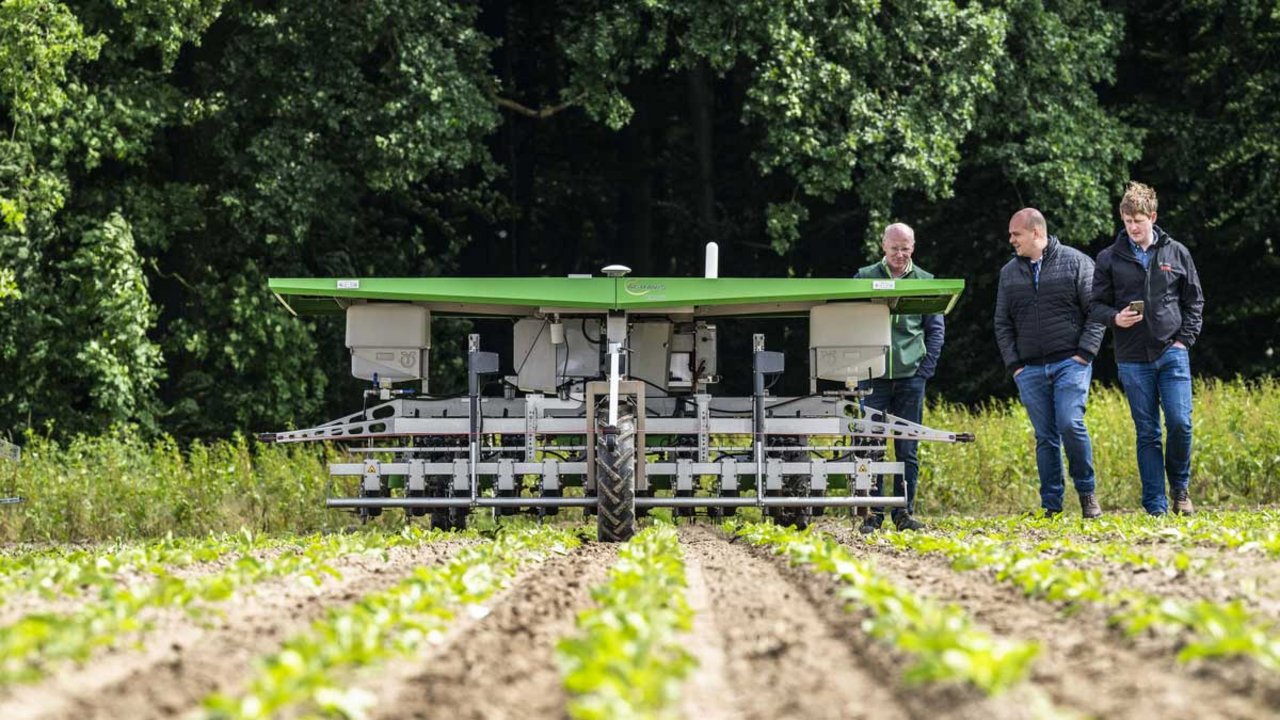
Field robots are increasingly making their way into agriculture, enabling more efficient workflows and more targeted use of resources. Particularly in labour‑intensive crops, they take over repetitive tasks and significantly relieve human labour. By decoupling work processes from fixed working times, they also create greater flexibility. Economic viability, logistics, technological maturity and regulatory conditions determine how practical their use is. Which solutions are already working today, where current limitations lie and what potential the next development stage holds can be experienced hands‑on at the DLG Feldtage 2026 in the FarmRobotix exhibition area.
Field robotics is increasingly evolving from a visionary future technology into a practically relevant building block of modern agriculture. In Germany, however, its application must still be assessed in a differentiated way: while autonomous systems are already established in certain segments, large‑scale deployment remains the exception.
At present, field robotics is most widespread in specialty crops such as vegetable production and in labour‑intensive organic farming systems. Here, autonomous hoeing and seeding robots can play to their strengths by carrying out precise, repetitive tasks while significantly reducing the demand for manual labour. In conventional arable farming, by contrast, adoption is still limited, as a high degree of mechanisation already exists and the economic case for fully autonomous systems is more difficult to demonstrate. Nevertheless, pilot projects and initial practical applications show that a transition toward autonomous solutions is beginning in this sector as well, particularly for routine tasks such as soil cultivation and sowing.
Labour Relief as a Key Benefit
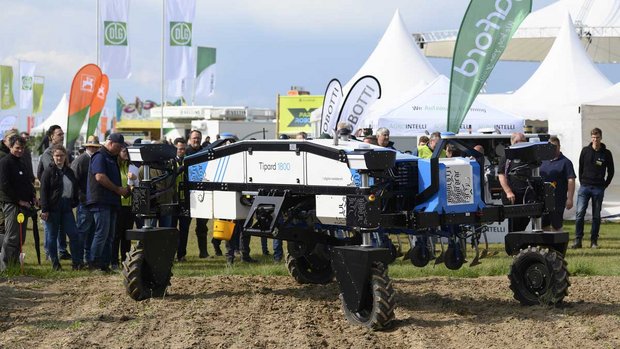
For agricultural enterprises, entering field robotics presents both opportunities and challenges. One of the main advantages is labour relief. In view of the growing shortage of skilled workers, autonomous systems can take over recurring activities and help mitigate personnel bottlenecks. In addition, field operations can be decoupled from the farmer’s working hours, creating new synergies in farm management and allowing working time to be used more flexibly.
Ecological benefits also play a role. The precise use of sensors, camera systems and artificial intelligence allows inputs such as fertilisers and crop‑protection products to be applied more selectively, reducing costs and environmental impacts alike. Furthermore, the lower weight of field robots results in reduced soil compaction.
High Investment Costs
These advantages are offset by high investment costs and a significant learning curve. Economic viability depends heavily on machine utilisation rates and farm structure. Logistics in particular prove to be a critical factor: autonomous traction units often need to be transported between fields by low‑loader, resulting in additional costs and time expenditure. Studies conducted as part of the Agro‑Nordwest experimental field show that this logistical share can account for around 10% of total working time.
At the same time, many systems are still highly specialised and can only perform individual operations such as hoeing or sowing. Required conversions between applications further reduce efficiency. Technical challenges such as unstable network coverage, sensor limitations or restricted working speeds also currently limit practical deployment.
Combining Autonomous and Conventional Systems
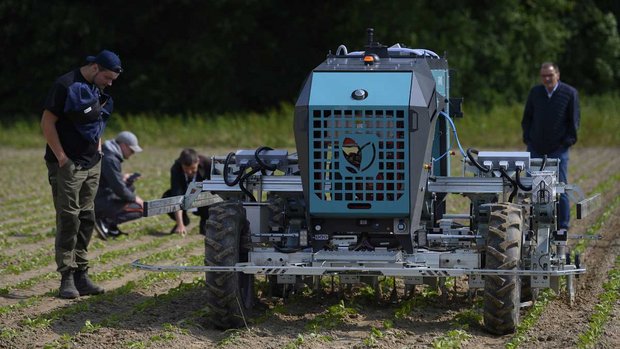
A key synergy arises from combining autonomous and semi‑autonomous systems. Semi‑autonomous technologies such as GPS‑based steering systems or automated machine settings are already widely used and improve precision and work quality. When combined with autonomous field robots, integrated systems can be created that deliver both efficiency gains and qualitative improvements. In the long term, this could lead to fully digitalised process chains in which machines communicate with one another and coordinate workflows autonomously.
One central future topic is autonomous traction vehicles, particularly autonomous tractors. In practice, the first issue here is transportation between fields. Due to current regulatory frameworks, autonomous driving on public roads is generally not permitted. As a result, larger autonomous systems currently have to be transported by low‑loader, requiring additional equipment and labour. In the future, however, solutions such as the electromechanical drawbar developed by Fraunhofer IVI (Fraunhofer Institute for Transportation and Infrastructure Systems) could help simplify this process.
Legal Issues Still Open
Regulatory requirements for autonomous field operation are also only partially clarified. In principle, unattended operation is possible provided that systems are equipped with adequate safety mechanisms, such as emergency‑stop functions and obstacle detection. Nevertheless, uncertainties remain regarding liability in the event of property damage or personal injury. In practice, at least indirect monitoring by the farmer or remote supervision is therefore often still planned. Future legislative developments, including at EU level, could provide greater clarity and accelerate adoption.
At present, the practical applicability of fully autonomous field operations remains limited. While many systems can reliably perform defined tasks, deficits still exist in the comprehensive assessment of work quality. Weather influences and unforeseen events in particular place high demands on sensors and algorithms. The ability to analyse work results in real time and automatically adapt operations is constantly improving but has not yet reached full maturity. This is one reason why autonomous systems are often deployed in clearly defined scenarios with conditions that are as stable as possible.
Significant Potential
In summary, field robotics has already arrived in agricultural practice in Germany, albeit primarily in niche applications. Its potential is undisputed, particularly with regard to labour relief, resource efficiency and sustainability. A broad breakthrough in arable farming, however, depends on several factors: improved economic viability, clear legal frameworks, reliable technology and a powerful digital infrastructure. With ongoing technological development and increasing practical experience, autonomous systems are expected to play a far more significant role in agriculture in the years ahead.
FarmRobotix at the DLG Feldtage
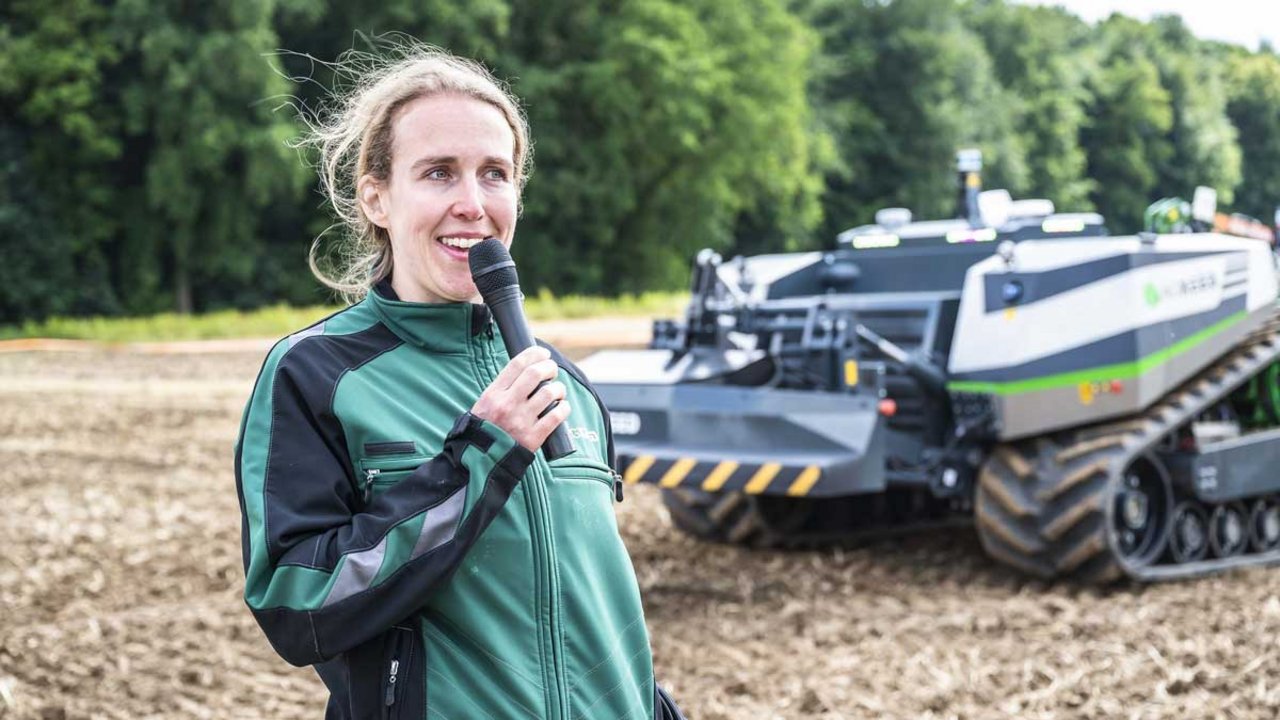
At the DLG Feldtage 2026, the FarmRobotix platform offers visitors the opportunity to experience the performance of modern field robotics firsthand. The focus is on live demonstrations: autonomous traction vehicles will showcase their driving and working processes in soil cultivation on specially designed plots, while specialised field robots will perform mechanical weed control under realistic conditions in sugar beet and maize stands.
This programme is complemented by expert presentations held twice daily at 11:30 a.m. and 3:30 p.m., where current research results and practical experience relating to robotics, artificial intelligence and automation in crop production will be presented on the DLG Expert Stage. Visitors seeking a compact overview can join expert‑guided tours offered daily, which bundle key innovations, explain functional principles and enable direct exchange with manufacturers and developers.
Another highlight in the FarmRobotix area is the Field Robot Event, an international competition in which student teams present self‑developed agricultural robots under practical conditions. The machines must independently complete several crop‑production tasks, demonstrating the current state of research. At the same time, the competition provides an outlook on future developments and illustrates the innovation potential of the next generation of agricultural robotics.
Information on the technical programme, expert tours and the Field Robot Event can be found here.