

Systemic Crop Protection as the Key to Stable Yields
Resistance development, the withdrawal of key active substances and the emergence of new pests and diseases are increasing pressure on arable farming and clearly demonstrate that future‑proof crop production requires an integrated, systemic approach. Crop rotation, soil tillage, variety selection, precision technologies and the targeted use of chemical crop protection products must be combined into a coherent overall strategy. How such strategies can be implemented in practice will be showcased at the DLG Feldtage 2026 from 16 to 18 June in Bernburg, featuring live demonstrations, expert presentations and innovative solutions for sustainable resistance management.
The development of agricultural crop production since the second half of the 20th century has been closely linked to the use of chemically synthetic crop‑protection products. These active ingredients enabled high and stable yields, particularly in increasingly specialised and intensified crop‑rotation systems. Narrower crop rotations, a stronger focus on a limited number of market crops and the associated rise of specific harmful organisms led to a structural dependence on highly effective herbicides, fungicides and insecticides. However, this system is increasingly reaching its limits.
A Shrinking Chemical Toolbox
Resistance development in grass weeds such as blackgrass (Alopecurus myosuroides) is progressing, while at the same time the number of available active substances continues to decline. Since 2019, more than 80 chemically synthetic active substances have been withdrawn, while no new active substance from this group has been approved in the EU. In addition, the approval procedures for crop‑protection products in Germany and Europe are among the strictest worldwide. For agricultural practice, this results in a dual challenge: increasing phytosanitary pressure combined with a shrinking chemical toolbox.
This trend is particularly evident in grass‑weed control in winter cereals. For many years, the soil‑applied active substance flufenacet formed the backbone of autumn treatments against blackgrass, ryegrass and other grass weeds. The final withdrawal of this active substance in December 2026 therefore marks a turning point. The remaining soil‑active substances such as prosulfocarb, pendimethalin or chlortoluron have often been in use for many years, are in some cases already at risk of resistance development and have a narrower spectrum of activity. As a result, selection pressure on the remaining modes of action increases significantly, further accelerating the risk of resistance development.
With the new active substance Luximo, a herbicidal mode of action for grass‑weed control in winter wheat is available for the first time in around two decades that does not show cross‑resistance to ALS or ACCase inhibitors. Strategically, however, such an active substance must not be regarded as a universal solution, but rather as one individual element within a significantly thinned instrumentarium. The introduction of innovative modes of action in particular requires especially responsible integration into integrated resistance‑management strategies.
Agronomic Measures Regain Importance
The withdrawal of key active substances results in a structural shift in weighting within crop‑protection systems. Agronomic measures move from a supporting role to becoming the central foundation of crop management. Post‑harvest management and soil cultivation increasingly determine the level of grass‑weed pressure in the following autumn. Flexible, multi‑stage systems replace rigid tillage regimes. Seedbed management is also gaining importance. Later sowing dates in winter cereals can significantly reduce grass‑weed pressure, but are associated with yield risks, making site‑specific balancing essential.
Crop‑rotation design thus becomes the central lever for effective resistance management. Narrow, winter‑cereal‑dominated rotations have contributed significantly to the current situation, as they favoured the selection of specific grass weeds. The integration of spring crops, catch crops and crops with different sowing and harvest dates changes selection conditions and reduces the dominance of individual problem species. Variety selection and crop management complement this system by using competitive varieties with rapid early development to suppress weeds. In this context, field hygiene is not an isolated measure but a network of interlinked actions that must be aligned with site conditions, weather patterns and farm management objectives. This is where the importance of systemic thinking becomes clear: individual measures lose effectiveness when viewed in isolation, but exert a stabilising effect when combined.
SBR/Stolbur as an Example of a Systemic Approach
The necessity of a systemic approach becomes particularly clear in the case of SBR (Syndrome of Low Sugar Content) and Stolbur in sugar beet. Both diseases are caused by bacterial pathogens transmitted by the planthopper Hyalesthes obsoletus. The high mobility of the vector makes control particularly challenging. The spread of the planthopper is progressing dynamically from southern to northern Germany, while new host plants such as potatoes, beetroot or carrots are expanding the infestation spectrum. Currently, the integrated approach, in which all components must interact, represents the greatest lever for securing yields. Chemical control alone cannot be regarded as a sufficient solution. In addition, effective products are only authorised under emergency approvals.
However, results from national and European research projects show that agronomic measures can have a significant influence on planthopper population density. The deliberate avoidance of winter crops following sugar beet or potatoes removes the main food source for soil‑dwelling nymphs. Bare fallow or late‑sown summer crops can contribute to population reduction under high infestation pressure. In addition, deep soil cultivation, non‑host catch crops, promotion of early crop development and the earliest possible harvest dates play a role. The latter, however, cannot be implemented within tightly scheduled campaigns. Experience from Switzerland and southern Germany demonstrates that such systemic adjustments can significantly reduce both planthopper populations and disease symptoms. Large‑scale implementation is required, however. This example illustrates that such phytosanitary challenges can increasingly only be managed through regionally coordinated management approaches. Farm‑level measures alone are insufficient for highly mobile pests.
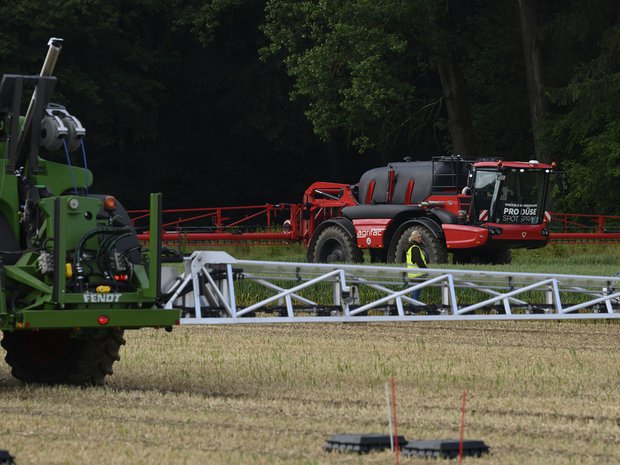
Integrated crop protection therefore does not represent an abstract guiding principle, but rather describes the imperative need to embed preventive, mechanical, biological and chemical measures into a coherent overall system. Chemically synthetic crop‑protection products retain their importance, particularly as a last‑resort option to safeguard yields and limit quality risks such as mycotoxin contamination. However, they are embedded within a broader management concept that takes site conditions, crop rotations, variety selection and technological innovation into account. Future technologies such as smart spraying systems, digital decision‑support tools, robotics and AI‑based application strategies increase precision and can reduce selection pressure, but do not replace the need for sufficient diversity of active substances.
DLG Feldtage 2026 Provide Direct Decision Support
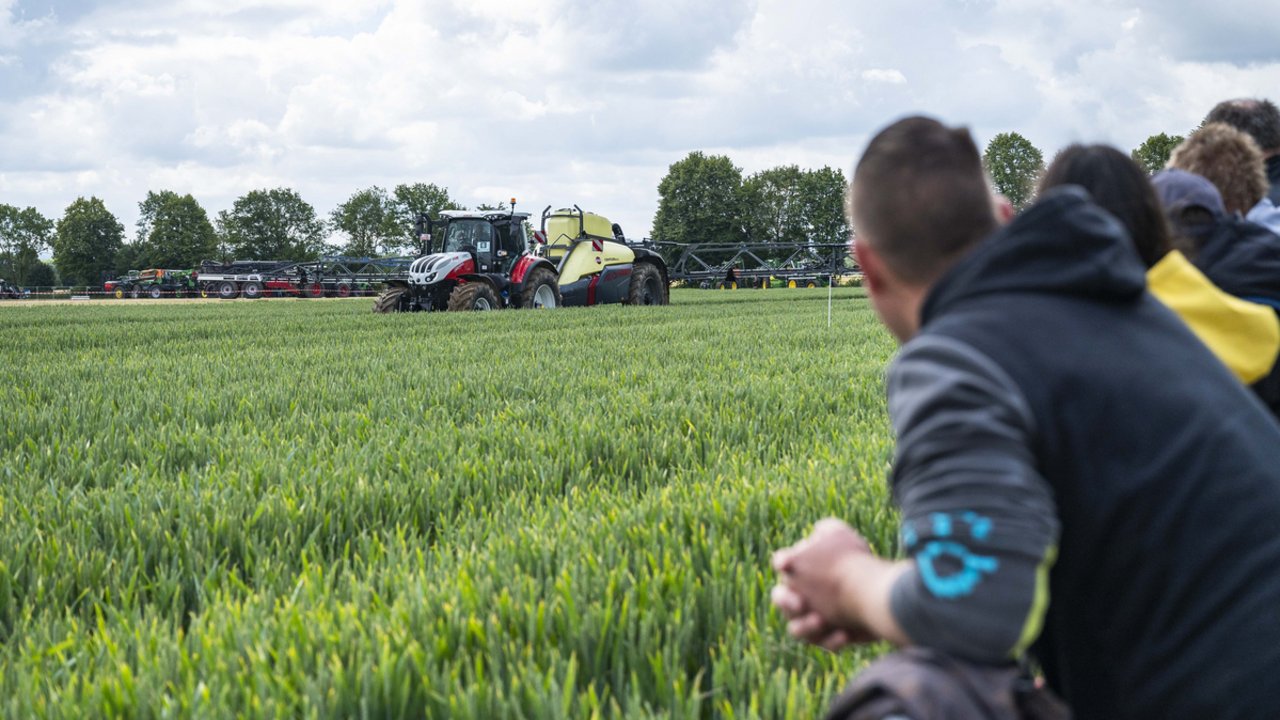
The DLG Feldtage 2026 from 16 to 18 June in Bernburg offer farmers direct decision‑making support in the field of crop protection: modern crop‑protection solutions will be demonstrated under real field conditions – ranging from state‑of‑the‑art spraying technology and mechanical weed control to integrated cropping systems. In more than 60 technically commented demonstrations, as well as compact formats such as pop‑up talks, consultation hours and expert stages, visitors will gain in‑depth insights into effective strategies for crop protection, fertilisation, soil cultivation and direct drilling – with a clear focus on practical implementation and operational efficiency.
In addition, the DLG Feldtage provide targeted strategic orientation: direct exchange with exhibitors and experts enables discussion of new active substances, resistance management, smart spraying, digital decision‑support tools, as well as robotics and AI‑based applications. This gives farms concrete impulses to secure productivity, use resources more efficiently and address challenges such as resistance development, climate change and emerging pests in a forward‑looking manner.